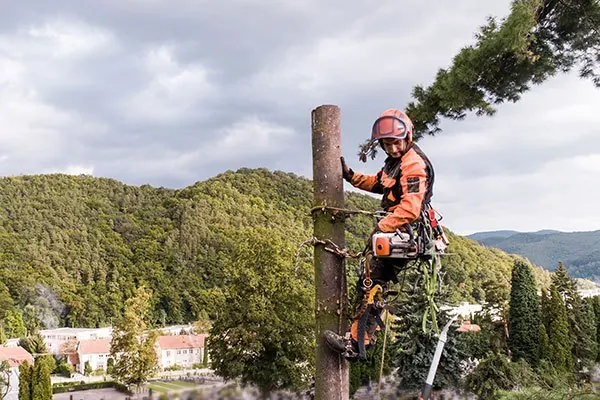
Tree lopping on the Gold Coast: what you are actually paying for
When someone searches for a tree lopper on the Gold Coast, they usually want one of three things: a tree made smaller, a tree made safer, or a tree gone. All three are covered here, along with the work that often comes with them, such as grinding the stump or cleaning up a palm. Every job is quoted on site by an independent local arborist or tree contractor, and the price is put in writing before work is booked.
This page explains each type of job in turn, how it is normally done on Gold Coast blocks, and what to check before you agree to a price.
Crown reduction and tree lopping
A crown reduction takes height and spread off a tree by cutting branches back to a fork or a side branch that is big enough to take over. Done well, the tree is smaller but still looks like itself and does not respond with a flush of weak shoots.
Common reasons on the Gold Coast:
- a tree shading solar panels or a pool;
- limbs hanging over a neighbour's roof or the street;
- a large tree on a small lot in Robina or the northern estates, planted when the house was new and now out of proportion;
- weight reduction ahead of storm season on a tree that is otherwise healthy.
Topping, where the whole crown is cut back to stubs, is the version to avoid. The regrowth is fast, crowded and poorly attached, and the big wounds tend to rot. If a quote describes the job as "cut back to the trunk" or "lop to 4 metres" without saying where the cuts go, ask.
Tree pruning
Pruning is the lighter, more selective work. It includes:
- deadwood removal, which matters on large eucalypts where dead limbs can drop without warning;
- crown thinning, opening up dense trees such as figs, poincianas and mangoes so wind passes through rather than catching the whole crown like a sail;
- crown lifting, raising the lower limbs to clear roofs, driveways, footpaths and gutters;
- formative pruning of young trees, which is cheap to do early and saves a lot of lopping later.
Gold Coast humidity and summer rain mean many trees put on a lot of growth quickly. For trees close to the house, a check every couple of years is often enough to keep things under control.
Tree removal
Sometimes a tree has to come out: it is dead, badly split, leaning towards the house, diseased at the base, in the way of a build, or simply the wrong tree in the wrong place. On most residential blocks a tree cannot just be felled in one piece. It is taken down in sections, with pieces lowered on ropes, cut from an elevated work platform, or lifted out by crane where there is no room to drop anything.
What drives the method is the target underneath. A gum standing over a tiled roof in Southport needs a very different plan from the same gum in an open paddock at Gilston. On steep hinterland blocks the real work is often getting the timber back up to the road.
Before removal, the contractor should consider whether the tree is protected. The City of Gold Coast regulates clearing of some vegetation through its City Plan, and state koala habitat rules apply across mapped parts of South East Queensland. The FAQ explains how to check.
Stump grinding
Once a tree is down, the stump can be left, cut flush, or ground out. A stump grinder chews the stump and the top of the main roots into chips, normally to somewhere below the surface so the area can be turfed, planted or paved. Ask how deep the grind will go, and whether the chips are left in the hole, spread on the garden or taken away.
Access matters. Narrow side paths on estate homes may need a compact machine, and the grinder has to reach the stump without crossing soft ground or septic lines on acreage. Where a slab, pool or retaining wall is going in, full root removal may be needed instead of grinding.
Palm cleaning and removal
The coast is full of palms: cocos (queen) palms, golden canes, bangalows, Alexandras, Washingtonias, date palms and coconut palms near the beach. Cocos palms in particular drop heavy seed stalks and dead fronds onto pools and paths, and they are widely regarded as an environmental weed in South East Queensland.
Palm work is usually either a clean, where the dead and dying fronds, seed stalks and any nuts are taken off, or a full removal. As above, a palm cannot be shortened; cutting the crown kills it.
Storm damage clean-up
South East Queensland's storm season runs through the warmer months, and storm damage is one of the main reasons people need tree work at short notice. Hung-up limbs and partly fallen trees are dangerous because the timber is twisted and under load, so this is not a job for a household chainsaw.
If a tree or limb is on a power line, stay well clear and call Energex, the electricity distributor for South East Queensland, or emergency services. Only people authorised to work near live lines should go near it. If a tree has fallen on the house, your insurer may want photos and a written quote before work goes ahead, so take pictures first if it is safe.
Who does the work
We are a referral service. The arborists and tree contractors we pass jobs to are independent local businesses. We ask them to hold the licences and insurance the job needs, and you can and should ask to see the certificate of currency before they start. If the work involves anything near power lines, check they are authorised for it.
For a fuller explanation of qualifications and what to ask for, see Arborist or tree lopper?. For planning figures, see the Gold Coast tree lopping cost guide.