The short answer
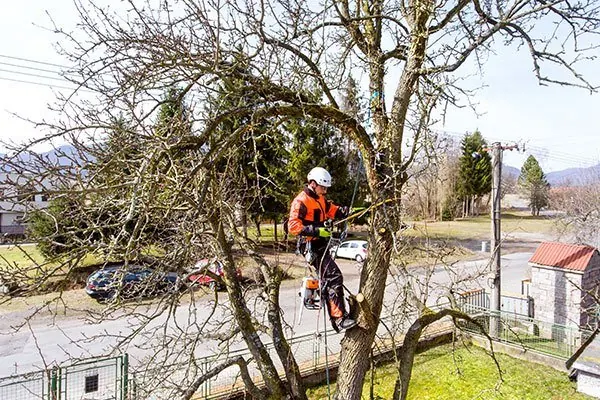
On the Gold Coast, "tree lopper" is the everyday name people search for when they want a tree trimmed, reduced or removed. "Arborist" is the professional term for someone trained in the care, assessment and management of trees. Many tree contractors are both: trained arborists who also do practical lopping and removal. Some are not.
For a straightforward job, such as removing a dead palm or lifting branches off a roof, what matters is that the work is done safely and the cuts are made properly. For anything involving a tree's health, its stability, a council application or a dispute, you want someone with genuine arboricultural training, and sometimes a consulting arborist who can write a formal report.
This guide explains the difference, what the qualifications mean, and what to ask before you book.
Where the two words came from
"Lopping" originally just meant cutting branches off a tree. Over time it picked up a bad name because of the practice of cutting big branches back to stubs, which damages trees and makes them more dangerous in the long run. Arborists have spent decades trying to move the industry away from that, which is why some prefer not to be called loppers at all.
Homeowners, though, still search for "tree lopper". It is the word most people use, and there is nothing wrong with it as long as the work is done properly. What you are really looking for is the skill, not the label.
What an arborist actually knows
Arboriculture is the study and management of individual trees, as opposed to forests. A trained arborist understands:
- how trees grow and respond to cuts, so they know where to prune to keep a tree strong rather than encourage weak regrowth;
- tree biology and health, including signs of decay, disease and stress;
- structure and risk, such as how to recognise a weak fork, a crack, a lean that has changed, or root damage;
- species, which matters on the Gold Coast, where native gums, figs, palms and invasive weeds each behave differently;
- safe work methods for climbing, rigging and machinery.
Qualification levels
In Australia, arboriculture is taught under the Australian Qualifications Framework (AQF). Two qualifications come up most often:
| Qualification | What it generally covers | Typical role |
|---|---|---|
| Certificate III in Arboriculture (AQF Level 3) | Practical tree work: climbing, pruning, removal, rigging, safe use of equipment | Climbing arborist, tree worker |
| Diploma of Arboriculture (AQF Level 5) | Tree assessment, risk, management planning, reporting | Consulting arborist |
The national training packages describe these qualifications in detail; see the sources at the end of this guide. Training is only part of the story. Experience counts, and many excellent tree workers have learned on the job alongside qualified arborists.
When a Gold Coast job needs more than a tree lopper
Council and koala rules
The City of Gold Coast regulates clearing of some vegetation on private land through its City Plan, and the Queensland Government regulates clearing of koala habitat in mapped parts of South East Queensland. If your tree may be protected, and you want to remove it or prune it heavily, an application may be needed. In some cases a report from a qualified arborist supports that application. Check with the City what is required for your lot.
Development and building
If you are building, extending, subdividing or putting in a pool near trees, the approval may set conditions about which trees stay, how they are protected, and how close work can get to them. A consulting arborist can assess the trees and set out tree protection zones.
Disputes and insurance
Where there is a disagreement with a neighbour about a tree, a Queensland tribunal (QCAT) may be involved under the Neighbourhood Disputes (Dividing Fences and Trees) Act 2011. An independent arborist report can be useful evidence. Insurers may also ask for an arborist's opinion after storm damage.
Tree health and risk
If you are worried that a tree may fall, has started to lean, has fungi at the base, or has lost a lot of leaves, a proper assessment comes before any cutting. Sometimes the answer is targeted pruning rather than removal; sometimes the tree really does need to go. Either way, the decision should be based on an inspection.
When a capable tree contractor is fine
Plenty of everyday jobs simply need a careful, competent crew:
- removing a dead tree or a palm;
- lifting branches clear of the roof, gutters or driveway;
- cleaning palms of fronds, seed stalks and nuts;
- grinding stumps;
- clearing storm damage that is on the ground.
Even here, the method matters. Ask how the job will be done.
Questions to ask before you book
- Where will the cuts be made? You want to hear that branches are cut back to suitable side branches or the trunk collar, not to stubs.
- Who will be climbing, and what training do they have? A Certificate III or equivalent experience is a reasonable expectation for climbing work.
- How will the wood come down? Climbing and rigging, an elevated work platform, or a crane. Each suits different sites.
- What will happen to the stump, the logs and the branches? Get it written into the quote.
- Does the tree need approval? A good contractor will raise this if the tree looks like it might be protected, and will not start work that needs approval until you have it.
- Can I see your insurance? Ask for a certificate of currency. If the work is near power lines, ask about authorisation.
- How will you check for wildlife? Especially on bushland edges, where koalas, possums and nesting birds are common.
Red flags
Be cautious if someone:
- offers to "top" a large tree or "cut it back to the trunk";
- knocks on your door after a storm and asks for cash up front;
- cannot tell you what species the tree is or why it needs work;
- dismisses questions about approvals or insurance;
- quotes without seeing the tree.
None of these necessarily means the person is dishonest, but they are good reasons to get another quote.
Gold Coast trees that need particular care
The city's mix of coastal, suburban and hinterland trees means a crew needs to know what it is working on:
- Eucalypts such as spotted gum and forest red gum can drop limbs suddenly and are often koala trees.
- Figs have aggressive roots and large, heavy crowns; heavy cutting can stress them.
- Palms cannot be shortened; removing the crown kills them.
- Norfolk Island pines lose their form permanently if topped.
- Camphor laurel is a restricted invasive plant, but removing large ones near creeks needs a plan to stabilise banks.
How this site works
Arborist Gold Coast QLD is a referral website. When you get in touch, we pass the job to an independent local arborist or tree contractor who quotes on site and does the work. We ask the contractors we work with to hold the licences and insurance the job needs, and you are entitled to ask to see them before work starts. If your job needs a formal arborist report, say so when you call so the right person is lined up.
For prices, see the Gold Coast tree lopping cost guide. For the services we arrange, see the tree lopping page.